

Indiafeast — Premium Basmati and Non-Basmati Rice Manufacturer & Exporter from India to South Africa
Rice export from India to South Africa, It is Sub-Saharan Africa’s most commercially developed economy and one of the continent’s largest and most structurally consistent rice import markets — a nation of 60 million people with zero domestic rice production capability and a total annual rice import requirement of approximately 1.2 million metric tons. South Africa’s climate, chronic water scarcity, and the absence of suitable irrigated growing conditions make commercial rice cultivation economically unviable anywhere in the country — which means South Africa has been entirely dependent on rice imports to meet 100% of national consumption for decades, creating a permanent, large-volume import market that provides consistent demand regardless of international market cycles or domestic agricultural policy changes. India exported USD 108.93 million worth of rice to South Africa in 2024 (UN COMTRADE, 197,886 metric tons) — confirming India as South Africa’s second-largest rice supplier. Thailand and India together supply over 95% of South Africa’s total annual rice import requirement, a two-supplier market concentration that reflects the established trade relationships, competitive pricing, and logistical efficiency these two origins provide for South African food importers. The primary product driving India’s South Africa rice trade is Long Grain Parboiled Rice — specifically IR64 5% broken parboiled — which is the dominant variety in South Africa’s mass retail food market and is stocked prominently across all major South African supermarket chains including Shoprite, Pick n Pay, SPAR, Checkers, and Woolworths Food. Alongside this high-volume parboiled trade, India’s 1121 Basmati rice serves South Africa’s 1.5 million South Asian-origin population — one of Africa’s largest Indian diaspora communities — concentrated in Durban’s Phoenix and Chatsworth townships, Johannesburg’s Lenasia suburb, and Cape Town, who maintain year-round household demand for authentic GI-tagged Indian Basmati for traditional cooking.
As a direct long grain rice exporter from India to South Africa, Indiafeast Millers Private Limited supplies DOH Regulation R246 (amended R4388, February 2024) MRL compliant IR64 Long Grain Parboiled Rice and 1121 Basmati Rice to South African importers, wholesale distributors, and food retail buyers in Johannesburg, Cape Town, Durban, and Pretoria — in full compliance with South Africa’s food import regulatory framework administered by the Department of Health (DOH) under the Foodstuffs, Cosmetics and Disinfectants Act 54 of 1972, and the Department of Agriculture, Land Reform and Rural Development (DALRRD) under the Agricultural Pests Act 36 of 1983. An import permit from DALRRD — required for all plant-origin agricultural imports — must be obtained before the consignment is shipped, not on arrival; pre-shipment NABL multi-residue MRL testing against DOH R246/R4388 standards with Codex Alimentarius fallback; and phytosanitary certification from India’s Plant Quarantine Authority are all provided as standard. Processed at our ISO-Certified, FSSAI, and APEDA-registered facility in Karnal, Haryana — every South Africa-bound consignment includes complete DALRRD and DOH documentation for seamless Durban Port clearance. Sea transit: 10 to 14 days. Contact us for FOB/CIF pricing.
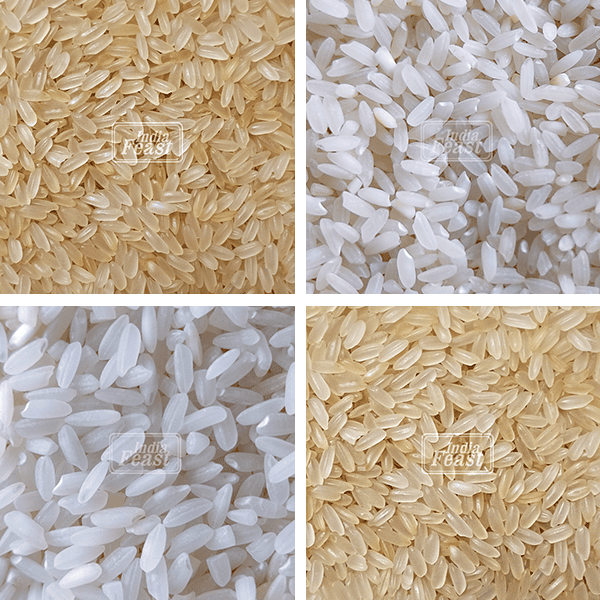
Indian Rice Varieties We Export to South Africa



South Africa Rice Import Regulations — DOH R246 R4388 MRL, DALRRD Import Permit, Phytosanitary Requirements and Durban Port Customs
South Africa’s food import regulatory framework for rice involves two primary government departments whose requirements must both be satisfied before any consignment is legally permitted to enter the country. The Department of Health (DOH), operating under the Foodstuffs, Cosmetics and Disinfectants Act 54 of 1972, is responsible for setting and enforcing Maximum Residue Limits (MRLs) for pesticides in imported foodstuffs through Regulation R246 — first published 11 February 1994 and most recently amended by Regulation R4388 on 16 February 2024. R4388 updated the list of restricted pesticide compounds, their groupings, and corresponding MRL values in South African food law. Where a specific pesticide compound is not explicitly listed in Regulation R246 or its amendments, South Africa falls back to Codex Alimentarius international MRL standards as the applicable reference — a standard used consistently throughout the DOH’s Port Health food safety inspection framework at Durban Port, Cape Town, and Port Elizabeth. The DOH’s Directorate: Food Control administers import food safety compliance through Port Health Services officers stationed at major ports of entry who inspect food consignment documentation and conduct risk-based physical and laboratory testing of imported rice. Consignments found non-compliant with R246/R4388 MRL limits or lacking required documentation face rejection, mandatory re-export, or destruction at the importer’s expense.
The second critical regulatory requirement is administered by the Department of Agriculture, Land Reform and Rural Development (DALRRD) under the Agricultural Pests Act 36 of 1983. Rice is a plant-origin product requiring a DALRRD phytosanitary import permit — and this permit must be obtained before the consignment is shipped, not after it arrives at Durban Port. The DALRRD’s Directorate: Plant Health evaluates phytosanitary import conditions on a commodity-and-country-of-origin-specific basis, and for rice imported from India, a Phytosanitary Certificate from India’s Plant Quarantine Authority confirming freedom from regulated quarantine pests must accompany the consignment. Goods arriving at South African ports without the required DALRRD permit and Phytosanitary Certificate are refused entry by DALRRD’s Agricultural Product Inspection Services (APIS) inspectors — which means an Indian rice exporter who ships without ensuring the South African importer’s DALRRD permit is in place before shipment will face a port rejection at the importer’s cost. Fumigation certificates for stored grain pest treatment are also required for rice imports. South Africa applies English-language food labelling requirements under the DOH’s Regulation R146 of 2010 — product name, country of origin, net weight, South African importer details, nutritional information, and expiry date are mandatory on all retail-packaged rice sold domestically. Indiafeast provides English-language retail label design support as standard for South African importer partners.
South Africa Rice Market — India's #2 Supplier, 1.2 MMT Annual Import and Dual Market Demand
India exported USD 108.93 million rice to South Africa in 2024 (197,886 MT, COMTRADE) — India’s position as South Africa’s second-largest rice supplier is well-established and strategically important for Indian rice exporters. South Africa’s total rice import market of approximately 1.2 million metric tons annually is among Sub-Saharan Africa’s most reliable and consistently large-volume food import markets, because South Africa’s permanent structural import dependency (zero domestic production) means demand does not fluctuate with local growing seasons — it is year-round and uninterrupted. Long Grain Parboiled Rice — IR64 5% broken parboiled in particular — is the dominant variety in South Africa’s everyday rice market and is stocked by South Africa’s four major supermarket groups across their thousands of outlets: Shoprite Group (Shoprite, Checkers, Usave — Africa’s largest retailer by store count), Pick n Pay Holdings, SPAR South Africa (2,200+ outlets including SPAR, SUPERSPAR, SaveMor), and Woolworths Food. Wholesale cash-and-carry formats including Makro (Walmart-owned Massmart) purchase Indian parboiled rice in bulk pack sizes for independent retailers, food service operators, and the restaurant trade. South Africa’s 1.5 million Indian-origin diaspora population — concentrated in Durban’s Overport, Phoenix, and Chatsworth areas, Johannesburg’s Fordsburg and Lenasia neighbourhoods, and Pretoria East — creates a distinct and commercially significant premium demand channel for 1121 Basmati Rice and Pusa Basmati at Indian specialty grocery stores, conventional supermarkets stocking South Asian products, and online grocery platforms serving the South African Indian community. Sea freight from Nhava Sheva (JNPT) or Mundra Port to Durban Port — South Africa’s primary container port handling over 2.9 million TEUs annually — is typically 10 to 14 days on established India-South Africa container services.
Indiafeast Millers exports premium Indian Basmati and Non-Basmati rice to importers, distributors, and food companies worldwide. Click any country to explore our dedicated rice export page.
 Algeria
 Angola
 Australia
 Afghanistan
 Azerbaijan
 Bahrain
 Belgium
 Benin
 Bosnia & Herzegovina
 Brazil
 Bulgaria
 Burkina Faso
 Cameroon
 Canada
 Chad
 China
 Congo
 Croatia
 Cyprus
 Denmark
 Djibouti
 Egypt
 Estonia
 Finland
 France
 Gabon
 Georgia
 Germany
 Ghana
 Guinea
 Indonesia
 Iraq
 Ireland
 Italy
 Ivory Coast
 Japan
 Jordan
 Kazakhstan
 Kenya
 Kuwait
 Kyrgyzstan
 Lebanon
 Liberia
 Libya
 Madagascar
 Malaysia
 Maldives
 Mali
 Mauritania
 Mauritius
 Mexico
 Monaco
 Morocco
 Namibia
 Netherlands
 New Zealand
 Niger
 Nigeria
 Norway
 Oman
 Papua New Guinea
 Philippines
 Poland
 Portugal
 Qatar
 Romania
 Saudi Arabia
 Senegal
 Seychelles
 Sierra Leone
 Singapore
 Somalia
 South Africa
 South Korea
 Spain
 Sri Lanka
 Sweden
 Switzerland
 Taiwan
 Tanzania
 Timor-Leste
 Togo
 Turkey
 Turkmenistan
 UAE
 Uganda
 Ukraine
 United Kingdom
 USA
 Uzbekistan
 Yemen
Trusted Pesticide free Rice Exporter from India to South Africa
" built on consistent quality, reliable supply, and long-term buyer relationships "
Years Of Experience
Satisfied Clients
Countries Served
Private labeling
Every Certificate Earned. Every Standard Met
" Every consignment of Rice that leaves our facility is backed by internationally recognised certifications "


Our Rice Export & Management Office — India
Indiafeast Millers Private Limited operates from Karnal, Haryana — at the heart of India's GI-tagged basmati cultivation belt. Our ISO-Certified rice milling facility provides pre-shipment NABL-accredited multi-residue pesticide testing against South Africa's DOH Regulation R246 (most recently amended R4388, February 2024) MRL standards with Codex Alimentarius fallback — providing a clean MRL test report for every South Africa-bound consignment as standard. We supply both of South Africa's distinct rice market segments: IR64 5% broken Long Grain Parboiled for mass retail channels (Shoprite, Pick n Pay, SPAR, Checkers) and 1121 Basmati for South Africa's 1.5 million Indian-origin diaspora community. Critical compliance note for South African importers: DALRRD requires a plant health import permit to be obtained before the rice consignment is shipped from India — not on arrival. Indiafeast assists importer partners in verifying this requirement is fulfilled before every South Africa-bound shipment departs. India exported USD 108.93 million rice to South Africa in 2024 (197,886 MT, UN COMTRADE). Sea transit from Nhava Sheva (JNPT) and Mundra Port to Durban Port: 10 to 14 days.
📍 View on Google Maps — Indiafeast Millers Private Limited, India
Everything South African importers, distributors, and wholesale buyers need to know about sourcing Indian rice directly from India.