

Indiafeast — Premium Basmati and Non-Basmati Rice Manufacturer & Exporter from India to Kenya
Rice export from India to Kenya, It is East Africa’s largest and most commercially significant rice import market — and the African country where India’s position as the dominant rice supplier is most clearly established. Kenya produces only approximately 20% of its national rice consumption requirement domestically, primarily from the Mwea irrigation scheme in Kirinyaga County which grows aromatic Pishori rice — leaving 80% of the country’s rice demand to be met through imports, with India accounting for 60% of Kenya’s total rice import value and over 70% by volume. India exported USD 167.79 million worth of rice to Kenya in 2024 (UN COMTRADE) — India’s position as Kenya’s number one rice supplier is well ahead of Pakistan (26% value share) and Tanzania (11%). What distinguishes Kenya’s rice import market for Indian exporters is not just the volume of trade but the specific mandatory compliance framework that Kenya requires — the KEBS Pre-Export Verification of Conformity (PVoC) programme. This is Kenya’s unique pre-export certification requirement that makes it commercially essential for Indian rice exporters to work with suppliers who understand and actively manage PVoC compliance from the Indian end, because a rice consignment arriving at Mombasa Port without a valid Certificate of Conformity (CoC) from a KEBS-appointed inspection agency will face destination inspection and testing at the importer’s expense — a costly outcome that damages the importer-exporter relationship and delays market placement. Kenya’s rice consumption has grown strongly over the past decade driven by urbanisation (Kenya is over 28% urban, with Nairobi exceeding 4 million people), changing food preferences among Kenya’s growing middle class, and a national population growing at 2.3% annually — trends that make Kenya’s rice import market one of East Africa’s most commercially promising for established Indian exporters.
As a direct rice exporter from India to Kenya, Indiafeast Millers Private Limited supplies KEBS PVoC certified, KEPHIS phytosanitary compliant 1121 Basmati Rice, Pusa Basmati Rice, and IR64 Long Grain Parboiled Rice to Kenyan importers, wholesale distributors, and food companies in Nairobi, Mombasa, Kisumu, and Nakuru — with full KEBS PVoC Certificate of Conformity from a KEBS-appointed inspection agency arranged in India before every Kenya-bound shipment, KEPHIS Phytosanitary Certificate, Import Declaration Form (IDF) support through Kenya Revenue Authority’s iCMS system, Import Standardization Mark (ISM) documentation for retail products, and complete Mombasa Port and SGR ICD Nairobi delivery documentation. Processed at our ISO-Certified, FSSAI, and APEDA-registered facility in Karnal, Haryana — sea transit to Mombasa Port: 8 to 12 days. Contact us for FOB/CIF pricing.
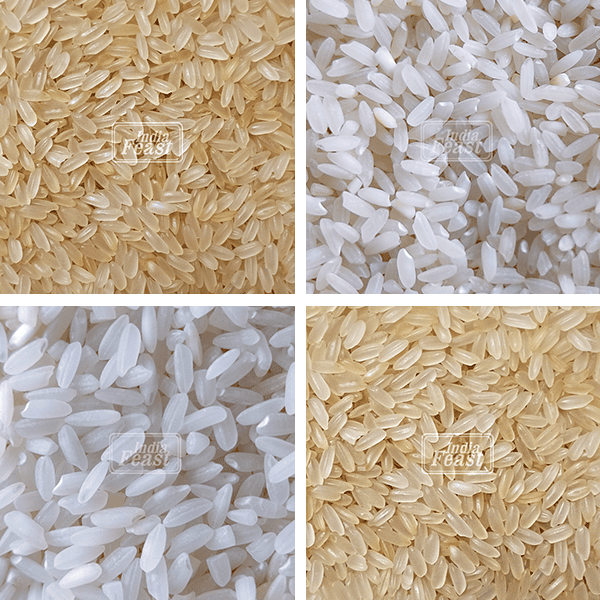
Indian Rice Varieties We Export to Kenya



Kenya Rice Import Regulations — KEBS PVoC Mandatory, KEPHIS Phytosanitary, EAC Import Tariff and Mombasa Port Clearance
Kenya’s rice import regulatory framework contains a compliance requirement that is unique among all of India’s significant rice export markets — and critically important for Indian rice exporters to understand and manage correctly before any Kenya-bound shipment departs. The Kenya Bureau of Standards (KEBS), established under the Standards Act CAP 496 of the Laws of Kenya, operates the Pre-Export Verification of Conformity (PVoC) programme as a mandatory conformity assessment system applied to regulated goods in the country of export — before the goods are shipped to Kenya. The KEBS PVoC Operations Manual Version 15 (February 2026) — the most current version of KEBS’s operational guidance — explicitly confirms that bulk shipments of cereals and pulses including rice are subject to mandatory PVoC certification before shipment. For Indian rice exporters, this means engaging a KEBS-appointed inspection and certification company operating in India — Intertek, SGS, or Bureau Veritas are the principal KEBS-appointed PVoC agents in India — who will inspect the rice consignment at the Indian loading port, verify product quality against applicable Kenyan standards and specifications, and issue a Certificate of Conformity (CoC) before the vessel sails. A rice consignment arriving at Mombasa Port without a valid KEBS PVoC Certificate of Conformity will be held by KEBS for mandatory destination inspection and testing — a process that is significantly more expensive, delays customs clearance, ties up the importer’s working capital in port dwell fees, and carries the risk of rejection, forced destruction, or compulsory re-export at the importer’s cost. For established Kenyan importers, PVoC CoC before shipment is not optional — it is operationally essential. KEPHIS (Kenya Plant Health Inspectorate Service) administers Kenya’s phytosanitary import requirements — a Phytosanitary Certificate from India’s Plant Quarantine Authority confirming freedom from regulated quarantine plant pests is mandatory for all plant-origin food imports. Kenya Revenue Authority (KRA) administers customs clearance through the iCMS (Integrated Customs Management System), and the Kenyan importer must file an Import Declaration Form (IDF) before the goods arrive. The Import Standardization Mark (ISM) from KEBS is required for all imported products sold in Kenyan retail markets as evidence of KEBS quality compliance. On import tariffs: Kenya applies the East African Community Common External Tariff (EAC CET) on rice imports. The standard EAC CET on milled and parboiled rice from outside the EAC is 75% of CIF value or USD 345 per metric ton, whichever is higher — one of Africa’s highest rice tariff rates. However, in June 2025 the EAC Council of Ministers granted Kenya an extension to import rice at a significantly reduced preferential rate of 35% or USD 200 per metric ton (whichever is higher) for a period — and separately in July 2025, the Kenyan government gazette-notified approval for 500,000 metric tons of duty-free grade 1 white milled rice imports until December 2025. Kenyan importers should verify the current applicable duty rate with KEBS and KRA at the time of any specific consignment.
Kenya Rice Market — India's #1 Supplier, Dual Demand for Basmati and Parboiled, and the SGR Advantage
India exported USD 167.79 million rice to Kenya in 2024 (COMTRADE) — India’s 60% value share and 70%+ volume share confirming Kenya as one of India’s most commercially important rice export markets in Sub-Saharan Africa. Kenya’s rice import market serves two distinct commercial segments that Indiafeast is positioned to serve from a single certified mill facility. The first and largest by volume is IR64 Long Grain Parboiled Rice — Kenya’s mass-market rice variety sold through national supermarket chains (Naivas Supermarket — Kenya’s largest domestic supermarket chain with 100+ outlets, Carrefour Kenya, QuickMart, Chandarana), wholesale cash-and-carry formats (Jumbo Foods, Tumaini Supermarket), and Kenya’s large network of wholesale markets including Gikomba Market and Wakulima Market in Nairobi, from which informal traders distribute to neighbourhood dukas and food stalls across the greater Nairobi metropolitan area. The second segment is premium Indian Basmati — 1121 Raw Basmati and Pusa Basmati — demanded by Kenya’s growing urban middle class in Nairobi’s Westlands, Karen, Lavington, Kileleshwa, and Kilimani areas, the HORECA sector (Nairobi’s extensive Indian and international restaurant industry in Westlands, Hurlingham, and the CBD), and Kenya’s 80,000+ Indian-origin community who maintain household demand for authentic GI-tagged Indian Basmati year-round. The Standard Gauge Railway (SGR) connecting Mombasa Port to Nairobi’s Inland Container Depot (ICD) in Embakasi has materially improved rice import logistics for Kenyan importers — allowing customs clearance at the Nairobi ICD directly, bypassing Mombasa Port’s congestion, reducing inland road trucking costs from Mombasa (480 kilometres), and enabling faster delivery to Nairobi’s wholesale distribution centres. Sea freight from Nhava Sheva (JNPT) or Mundra Port to Mombasa Port is typically 8 to 12 days on established India-Kenya container services.
Indiafeast Millers exports premium Indian Basmati and Non-Basmati rice to importers, distributors, and food companies worldwide. Click any country to explore our dedicated rice export page.
 Algeria
 Angola
 Australia
 Afghanistan
 Azerbaijan
 Bahrain
 Belgium
 Benin
 Bosnia & Herzegovina
 Brazil
 Bulgaria
 Burkina Faso
 Cameroon
 Canada
 Chad
 China
 Congo
 Croatia
 Cyprus
 Denmark
 Djibouti
 Egypt
 Estonia
 Finland
 France
 Gabon
 Georgia
 Germany
 Ghana
 Guinea
 Indonesia
 Iraq
 Ireland
 Italy
 Ivory Coast
 Japan
 Jordan
 Kazakhstan
 Kenya
 Kuwait
 Kyrgyzstan
 Lebanon
 Liberia
 Libya
 Madagascar
 Malaysia
 Maldives
 Mali
 Mauritania
 Mauritius
 Mexico
 Monaco
 Morocco
 Namibia
 Netherlands
 New Zealand
 Niger
 Nigeria
 Norway
 Oman
 Papua New Guinea
 Philippines
 Poland
 Portugal
 Qatar
 Romania
 Saudi Arabia
 Senegal
 Seychelles
 Sierra Leone
 Singapore
 Somalia
 South Africa
 South Korea
 Spain
 Sri Lanka
 Sweden
 Switzerland
 Taiwan
 Tanzania
 Timor-Leste
 Togo
 Turkey
 Turkmenistan
 UAE
 Uganda
 Ukraine
 United Kingdom
 USA
 Uzbekistan
 Yemen
Trusted Rice Exporter from India to Kenya
" built on consistent quality, reliable supply, and long-term buyer relationships "
Years Of Experience
Satisfied Clients
Countries Served
Private labeling
Every Certificate Earned. Every Standard Met
" Every consignment of Rice that leaves our facility is backed by internationally recognised certifications "


Our Rice Export & Management Office — India
Indiafeast Millers Private Limited operates from Karnal, Haryana — at the heart of India's GI-tagged basmati cultivation belt. Our ISO-Certified rice milling facility provides complete KEBS PVoC compliance management for every Kenya-bound consignment — arranging pre-shipment inspection and Certificate of Conformity (CoC) from a KEBS-appointed inspection agency (Intertek/SGS/Bureau Veritas) in India before the vessel sails, ensuring zero PVoC-related holds or destination testing at Mombasa Port. KEBS PVoC Manual Version 15 (February 2026) confirms bulk rice shipments are subject to PVoC — every Kenya-bound Indiafeast consignment departs with CoC in hand. India exported USD 167.79 million rice to Kenya in 2024 (UN COMTRADE) — India is Kenya's #1 rice supplier at 60% import value and 70%+ by volume. KEPHIS phytosanitary certificate, Import Declaration Form (IDF) documentation, and ISM support all provided as standard. Kenya EAC CET: currently operating under reduced preferential rates (verify with KEBS/KRA at time of shipment). Sea transit from Nhava Sheva (JNPT) and Mundra Port to Mombasa Port: 8 to 12 days. SGR ICD Nairobi direct delivery available.
📍 View on Google Maps — Indiafeast Millers Private Limited, India
Everything Kenyan importers, distributors, and food companies need to know — including Kenya's critical PVoC requirement that most importers overlook.