

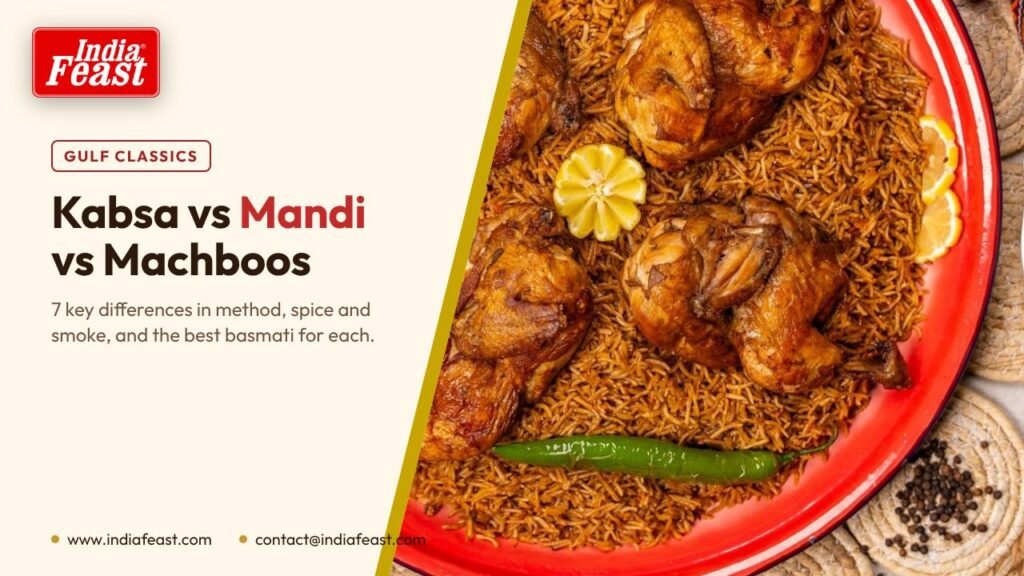
Kabsa vs Mandi vs Machboos: The Rice, Spices and Cooking Method Behind Each Gulf Classic
By Indiafeast Team · Updated 13 November 2026
Order rice and meat anywhere in the Gulf and you will meet three names again and again: kabsa, mandi and machboos. On the plate they can look similar, a mountain of golden rice with chicken, lamb or goat on top. Ask the cooks, though, and you will hear firm opinions, because kabsa vs mandi vs machboos is really a story of three different cooking methods.
This guide compares all three dishes side by side: where each comes from, how the rice is cooked, which spices define them, and which basmati grade gives the best result for each. It ends with a quick home method for each dish. The Indiafeast Team supplies basmati to Gulf restaurants, and the grade advice below comes from what those kitchens actually order.
Three dishes, one rice family
Kabsa, mandi and machboos all belong to the wider family of rice cooked with meat and stock that spread along Indian Ocean trade routes. Each one grew up in a different kitchen:
- Kabsa is the national dish of Saudi Arabia, cooked in homes and restaurants across the Kingdom and far beyond.
- Mandi comes from the Hadhramaut region of Yemen, where meat was slow-cooked in a sealed pit called a taboon until it fell off the bone.
- Machboos (also spelled majboos) is the everyday celebration rice of Kuwait, Bahrain, Qatar and the UAE.
Because the dishes travelled with traders and workers, every family has its own version, and the lines between them blur. The differences below describe the classic versions you will find in most Gulf kitchens.
Kabsa vs mandi: 7 quick differences
If you only need the short version of kabsa vs mandi, this table answers the questions cooks and restaurant buyers ask most.
| Kabsa | Mandi | |
|---|---|---|
| Home | Saudi Arabia, the wider Gulf | Yemen (Hadhramaut), now the whole Gulf and Kerala |
| Method | One pot: meat, tomato and spices make the stock, rice cooks in it | Meat slow-roasted separately; rice cooks below or beside it in broth |
| Colour | Reddish from tomato and spice | Golden, with smoky edges |
| Smoke | Not usual | Yes: pit oven or charcoal smoke (dukhan) |
| Spice | Baharat with dried lime, often tomato | Hawaij-style blend, lighter on tomato |
| Meat texture | Tender, cooked in the pot | Falls off the bone, roasted skin |
| Best rice | Golden sella basmati | Golden sella basmati |
So the difference between kabsa and mandi is mostly method and smoke: kabsa is a one-pot rice, mandi is roasted meat over rice that drinks its juices. Both need the same strong, long basmati.
Kabsa vs mandi vs machboos at a glance
| Kabsa | Mandi | Machboos | |
|---|---|---|---|
| Home | Saudi Arabia | Hadhramaut, Yemen | Kuwait, Bahrain, Qatar, UAE |
| Method | One pot: rice cooks in the meat's tomato stock | Separate: meat slow-roasted, rice cooked under the drippings | One pot, like kabsa, with its own spice balance |
| Signature flavour | Tomato, mixed kabsa spices | Smoke and meat drippings, light spice | Loomi (dried black lime), warm spices |
| Rice colour | Red-gold from tomato | Pale gold, sometimes streaked with saffron or colour | Golden brown |
| Texture goal | Flavour-soaked, separate grains | Very light, fluffy, smoky | Rich, separate grains with a sour note |
| Classic meat | Chicken or lamb | Lamb, goat or chicken | Chicken, lamb or fish |
How each dish is cooked
Kabsa: the one-pot method
Kabsa starts like a stew. Onions, garlic and tomato are fried, the meat is browned in the same pot and simmered until tender, and the soaked rice then cooks right in that spiced stock. Nothing is wasted: every grain absorbs the tomato, the meat fat and the kabsa spice mix. Common spices include black pepper, cardamom, cloves, cinnamon, dried lime and sometimes a little saffron. The result is the richest, most deeply coloured rice of the three.
Mandi: meat and rice apart
Mandi takes the opposite approach. The meat is rubbed with a light spice mix and cooked very slowly in a sealed pit oven, or in a covered oven at home, until it is tender enough to pull apart. The rice is cooked separately in a lightly spiced stock, traditionally placed under the hanging meat so the drippings fall into it. The rice stays pale and fluffy, and the flavour is smoky and meaty rather than spicy. At home, cooks often finish mandi with a piece of glowing charcoal in a cup of oil set inside the covered pot for a few minutes to add the smoke.
Machboos: the loomi pot
Machboos follows the kabsa pattern, one pot, meat first, rice in the stock, but its heart is loomi, the sun-dried black lime that gives Gulf cooking its sour, slightly smoky edge. Whole loomi simmer in the stock and are pressed against the pot to release their juice. Baharat-style warm spices and turmeric round it out. Machboos is usually served with daqous, a spicy tomato sauce.
Indiafeast grades for kabsa, mandi and machboos
All three dishes cook rice in a rich stock for a long time, so a parboiled grain is the safe choice. These grain lengths are taken from the Indiafeast product range.
| Grade | AGL (raw) | Kabsa | Mandi | Machboos |
|---|---|---|---|---|
| Indiafeast Golden Sella Basmati | 8.35 mm | Best | Best | Best |
| Indiafeast Creamy Sella Basmati | 8.35 mm | Very good, softer | Very good | Very good |
| Indiafeast XXL Steam Basmati | 8.40 mm | Good for home pots | Good with care | Good for home pots |
For restaurants serving all three, one grade keeps life simple: stock golden sella and adjust only the stock and spice. Read our full guide to the best rice for kabsa for soak times and more detail.
Which basmati grade suits each dish
All three dishes need long grains that stay separate after cooking in stock. This is why Gulf restaurants overwhelmingly buy parboiled (sella) basmati: the grain is pre-hardened, so it survives the long simmer and the serving line without breaking or clumping. Our guide to the difference between raw, steam and sella basmati explains why.
| Dish | First choice | Why | Also works |
|---|---|---|---|
| Kabsa | 1121 Golden Sella | Stands up to the tomato stock and takes on colour beautifully | 1121 White Sella, 1121 Steam |
| Mandi | 1121 Golden Sella or Steam | Mandi rice must be very fluffy; steam gives a lighter grain for home batches | 1121 White Sella |
| Machboos | 1121 Golden Sella | Long simmer with loomi needs a firm grain | 1509 Sella for value menus |
The 1121 variety is the usual choice because its extra-long grain, which can pass 8 mm raw, looks spectacular when piled on a serving platter. Value-focused restaurants often use 1509 sella, which keeps most of the length at a lower price. For the full picture of varieties and lengths, see our basmati characteristics and varieties guide.
Quick method: chicken kabsa (serves 6)
Ingredients (serves 6)
- 3 cups (about 560 g) 1121 golden sella basmati, washed and soaked 45 minutes
- 1 whole chicken (about 1.2 kg), cut into 8 pieces
- 3 tbsp oil or ghee
- 2 onions, chopped; 6 garlic cloves, crushed
- 3 tomatoes, grated, plus 2 tbsp tomato paste
- 2 tbsp kabsa spice mix (or baharat), 1 dried lime, 2 bay leaves
- 5¼ cups hot water or light stock
- Salt to taste; toasted almonds and raisins to garnish
How to make it
- Brown the base. Fry the onions in oil until golden, add the garlic, then the chicken, and brown it on all sides.
- Build the stock. Add the grated tomato, tomato paste, spices, dried lime and salt. Pour in the hot water and simmer, covered, for 25 to 30 minutes until the chicken is nearly cooked.
- Optional crisp finish. Lift the chicken out and keep it warm, or grill it for 5 minutes at the end for colour.
- Cook the rice. Bring the stock back to the boil, taste the salt, and add the drained rice. Boil uncovered until the liquid sinks below the rice.
- Steam. Cover tightly and cook on the lowest heat for 15 to 18 minutes. Rest 10 minutes.
- Serve. Fluff gently, pile onto a platter, top with the chicken, almonds and raisins, and serve with tomato salsa.
For mandi at home: cook the spiced meat covered in a low oven until tender, cook the rice in light stock at the same ratios, then smoke the assembled pot with a charcoal-and-oil cup for 5 minutes. For machboos: follow the kabsa method, skip most of the tomato and add 2 whole loomi, pierced, to the stock.
Water ratios for all three dishes
- 1121 golden sella: about 1¾ cups of stock per cup of soaked rice. Soak 45 to 60 minutes.
- 1121 steam: about 1½ cups per cup of soaked rice. Soak 30 minutes.
- Big pots: many restaurants boil the rice in the seasoned stock like pasta, drain, then steam. This is more forgiving at scale, and it is the method we describe in our golden sella cooking guide.
Make your own kabsa spice mix
Shop blends vary a lot, so many cooks toast and grind their own. This makes about 8 tablespoons: 2 tbsp black peppercorns, 2 tbsp cumin seeds, 1 tbsp coriander seeds, 1 tbsp green cardamom seeds, 1 tsp cloves, 2 cinnamon sticks and 1 crumbled dried lime. Toast the whole spices gently for 2 to 3 minutes, cool, grind fine and store airtight for up to 2 months. For machboos, lean the same blend towards loomi and add 1 tsp turmeric; for mandi, use half as much on the meat and keep the rice almost plain.
What to serve with each dish
- Kabsa: daqous (spiced tomato salsa), green chilli sauce, a cucumber-yogurt salad and lemon wedges.
- Mandi: sahawiq (a Yemeni green chilli and tomato relish), plain yogurt and a simple salad; the meat is the star.
- Machboos: daqous again, plus mahyawa or pickles in some Gulf homes, and crisp fried onions on the rice.
All three are platter dishes, served in the middle of the table so everyone eats together. Garnishes of toasted nuts, raisins and fresh coriander are common across the region.
Kabsa vs machboos: the loomi difference
Kabsa vs machboos is the closest comparison of the three. Both cook rice and meat in one pot, but machboos, the national dish of Kuwait and Bahrain, leans on dried black lime (loomi) and a Gulf spice mix called bezar, which give it a sharper, more citrusy taste. Kabsa usually has more tomato and a sweeter warmth from cinnamon and cardamom. Machboos is often finished with fried onions and raisins, and in Bahrain and Kuwait fish and shrimp machboos are as common as chicken.
Which one should a restaurant put on the menu?
For Gulf-style restaurants abroad, the answer is often all three, because they share the same rice and most of the same spices. Mandi needs an oven or a smoker and more time, so many kitchens start with kabsa and machboos, then add mandi on weekends. Train the team on one water ratio per dish, keep one rice grade, and cook a test pot from every new rice delivery. Our guide to pilaf vs pulao vs biryani covers the South Asian side of the same rice family.
Buying golden sella for Gulf rice dishes
If you buy rice for a restaurant, a catering business or a store, Indiafeast supplies golden sella, creamy sella and XXL steam basmati in 1 kg retail packs, 10 kg family packs and bulk bags. Every lot is Sortex cleaned and graded; see how on our rice manufacturing page. Browse the Indiafeast basmati rice store, compare the full basmati range, follow market levels on the basmati rice price page, or launch your own brand through private label packing. New to Indiafeast? Start at the home page.
Common mistakes with kabsa, mandi and machboos
- Using a soft rice. Raw basmati can turn mushy in a tomato stock. Sella grades keep the grains whole.
- Skipping the soak. Unsoaked sella stays hard in the centre while the outside softens.
- Too much liquid. The meat and tomato already add moisture. Measure the stock, do not guess.
- Stirring the pot. Stir once when the rice goes in, then let the steam work. Stirring breaks grains and releases starch.
- Rushing the rest. Ten covered minutes off the heat finish the grains and make fluffing easier.
Supplying rice for kabsa, mandi or machboos?
Indiafeast Millers exports 1121 golden sella, white sella and steam basmati in restaurant and retail packs, with private label options for Gulf distributors. Cook-test a sample against your current rice.
Request a Gulf-grade sampleFAQ
What is the difference between kabsa and mandi?
Kabsa cooks the rice in the pot with the meat and a tomato-spiced stock, giving rich, coloured grains. Mandi cooks the meat and rice separately: the meat is slow-roasted and its drippings flavour lightly spiced, very fluffy rice.
What is the difference between kabsa and machboos?
Both are one-pot dishes, but machboos is defined by loomi, dried black lime, which gives a sour, smoky flavour, while kabsa leans on tomato and a broader spice mix.
Which rice is used for kabsa, mandi and machboos?
Long-grain basmati. Gulf restaurants mostly use parboiled 1121 golden sella or white sella because the grains stay long and separate; 1121 steam is a good softer choice at home.
What is loomi?
Loomi is a whole lime that has been boiled briefly in salt water and sun-dried until black. Simmered in stock, it gives machboos its signature sour, slightly fermented note.
Is mandi rice supposed to be spicy?
No. Mandi rice is lightly seasoned so the smoky meat flavour leads. Kabsa and machboos carry more spice in the rice itself.
What water ratio should I use for these dishes?
With soaked 1121 golden sella, use about 1¾ cups of stock per cup of rice. With 1121 steam, use about 1½ cups. Boil uncovered until the liquid sinks, then steam on low, covered.
What is the difference between kabsa and mandi?
Kabsa cooks rice and meat together in one pot in a tomato-rich spiced stock. Mandi roasts the meat separately, often with smoke, and the rice cooks in broth that catches the meat juices. Both use long-grain golden sella basmati.
Mandi vs kabsa: which is spicier?
Neither is very hot. Kabsa usually tastes warmer and richer from tomato, cinnamon and baharat, while mandi is milder and smoky, with the flavour coming from the roasted meat and its juices.
What is machboos made of?
Machboos is rice cooked with chicken, lamb or fish in a stock flavoured with dried black lime (loomi), onion, tomato and the Gulf spice blend bezar. It is the national dish of Kuwait and Bahrain and is usually made with long-grain basmati.
Written by Indiafeast Team, Indiafeast Millers. Dishes and sources checked on 13 November 2026. Family recipes differ across the Gulf, so treat the classic versions here as a starting point.