

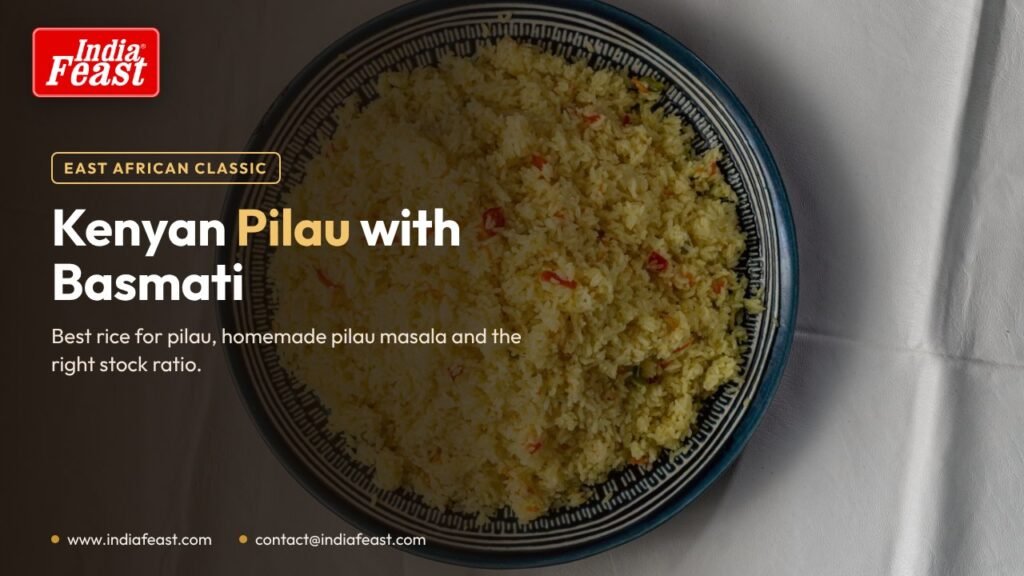
Kenyan Pilau with Basmati: Best Rice, Pilau Masala and Water Ratio
By Indiafeast Team · Updated 13 November 2026
Pilau is the rice dish of celebration in Kenya. It is cooked for weddings, Eid, Christmas, graduations and almost every big family Sunday. A good pot of Kenyan pilau rice is deep brown, fragrant with whole spices and full of tender beef, and every grain is separate rather than sticky.
The colour does not come from food dye or soy sauce. It comes from onions fried slowly until they are dark, and from pilau masala toasted in oil. The other secret is the rice. In this guide the Indiafeast Team shares a home recipe for 6, a homemade pilau masala, the right water ratio for each type of basmati and tips for cooking pilau for a crowd.
Where Kenyan pilau comes from
Pilau arrived on the Swahili coast of East Africa through centuries of Indian Ocean trade with Arabia, Persia and India. The word belongs to the same family as pilaf and pulao, rice cooked in a seasoned stock rather than plain water (Wikipedia, Pilaf). In Mombasa, Lamu and Zanzibar it grew into its own style, with a warm spice blend, slow-browned onions and beef, chicken or goat.
Today pilau is cooked across Kenya and Tanzania. Coastal cooks tend to use more spice and sometimes add potatoes, while upcountry homes often make a lighter version. Wherever it is cooked, it is almost always served with kachumbari, a fresh tomato and onion salad that cuts through the richness.
Best rice for Kenyan pilau rice
Kenyan cooks often choose an aromatic long grain. The local favourite is pishori from the Mwea area, and imported basmati is widely used in cities and by caterers. Basmati works very well because pilau is cooked in stock with fat and spices, and a long, firm grain soaks up flavour without turning mushy.
| Rice | Soak | Stock per cup of soaked rice | Result in pilau |
|---|---|---|---|
| 1121 Steam basmati | 30 min | About 1½ cups | Long, separate, absorbs colour well. Best all-round choice for home cooks |
| 1121 Golden Sella basmati | 45 min | About 1¾ cups | Very firm, never sticky. Best for big pots and catering |
| 1121 Raw basmati | 20 to 30 min | About 1⅓ to 1½ cups | Most fragrant, but softer and easier to break |
| 1509 Steam basmati | 30 min | About 1½ cups | Good grain length at a lower price |
These ratios assume rice that has been soaked and well drained, measured by volume. New-crop rice needs a little less liquid.
If you cook pilau often, keep one grade and learn its ratio, because each grade drinks stock differently. For a side-by-side of the two most common grades, see our 1121 vs 1509 basmati rice comparison, and for how steam and sella differ, our guide to raw, steam and sella basmati.
Best rice for pilau: Indiafeast grades compared
The best rice for pilau is a long-grain basmati that stays separate in a spiced stock. These are the Indiafeast grades East African cooks and importers choose most, with the grain lengths listed on our product pages.
| Grade | AGL (raw) | Pilau result | Best for |
|---|---|---|---|
| Indiafeast XXL Steam Basmati | 8.40 mm | Bright, aromatic, fluffy | Home pilau and Sunday family pots |
| Indiafeast Golden Sella Basmati | 8.35 mm | Firm, separate, rich colour | Weddings, hotels and large batches |
| Indiafeast Rozana Basmati | 8.00 mm | Fluffy, naturally aged, faster cooking | Everyday pilau on a budget |
| Indiafeast Creamy Sella Basmati | 8.35 mm | Softer, creamy, still separate | Coastal-style pilau with coconut |
If you cook Kenyan pilau rice for a crowd, golden sella is the safest choice because the parboiled grain holds its shape through long cooking and hot holding. For a small home pot, steam basmati gives the most aroma.
Homemade pilau masala recipe
Ready-made pilau masala is sold in every Kenyan supermarket, but a fresh homemade blend smells far better. Toast the whole spices in a dry pan over low heat for 2 to 3 minutes until fragrant, cool, then grind to a fine powder.
- 2 tbsp cumin seeds
- 1 tbsp black peppercorns
- 1 tbsp green cardamom pods (seeds only, or whole pods)
- 1 tsp whole cloves
- 2 cinnamon sticks, about 5 cm each, broken up
This makes about 6 tablespoons. Keep it in an airtight jar away from light and use it within 2 months. Some families add a little coriander seed or a bay leaf.
Ingredients (serves 6)
- 3 cups (about 560 g) 1121 steam or golden sella basmati rice
- 800 g beef on the bone or stewing beef, cut into large cubes
- 8 cups (2 litres) water for boiling the beef
- 2 tsp salt, plus more to taste
- 4 tbsp vegetable oil
- 2 large red onions, thinly sliced
- 6 garlic cloves, crushed
- 1 thumb-sized piece of ginger, crushed
- 2 tbsp pilau masala (homemade or shop-bought)
- 1 tsp whole cumin seeds
- 4 green cardamom pods, 4 cloves and 1 cinnamon stick
- 2 medium potatoes, peeled and quartered (optional)
- 4½ to 5¼ cups hot beef stock (from boiling the beef), depending on the rice
- Kachumbari to serve: 3 tomatoes, 1 red onion, 1 green chilli, coriander and lime juice
How to make Kenyan pilau with basmati
- Boil the beef. Put the beef in a pot with 8 cups of water, 1 tsp salt and half the garlic and ginger. Simmer for 50 to 60 minutes until tender. Lift out the meat and keep the stock hot.
- Wash and soak the rice. While the beef cooks, wash the rice 3 to 4 times until the water is nearly clear. Soak it for 30 minutes (45 for golden sella), then drain well.
- Brown the onions slowly. Heat the oil in a wide, heavy pot. Fry the onions on medium heat, stirring often, for 15 to 20 minutes until deep brown but not burnt. This gives pilau its colour and sweet, rich taste.
- Bloom the spices. Add the cumin seeds, cardamom, cloves and cinnamon and fry for 1 minute. Add the remaining garlic and ginger and fry for 1 minute more, then stir in the pilau masala and cook for 30 seconds.
- Fry the beef. Add the boiled beef and the potatoes, if using. Stir to coat everything in the spiced onions and fry for 3 to 4 minutes.
- Add the rice. Add the drained rice and stir gently for 2 minutes, so each grain is coated in oil and spice.
- Add the stock and boil. Pour in the hot stock: about 4½ cups for 1121 steam or 5¼ cups for golden sella. Taste and add salt; the stock should taste slightly salty. Boil uncovered on medium-high heat until the liquid sinks just below the rice.
- Cover and steam. Turn the heat to the lowest setting, cover tightly (seal with foil if the lid is loose) and cook for 15 to 20 minutes without opening. Rest for 10 minutes, then fluff gently from the sides.
Water ratio check: 3 cups of soaked 1121 steam rice with 4½ cups of stock is 1:1.5. For golden sella, 3 cups with 5¼ cups of stock is 1:1.75. If the rice is still firm at the end, sprinkle 3 to 4 tablespoons of hot stock over it and steam for 5 more minutes.
Tips for perfect pilau
- Be patient with the onions. Pale onions give pale pilau. Dark golden-brown onions give the classic colour without any dye.
- Use the beef stock. The stock from boiling the meat carries most of the flavour. Plain water gives a flat pilau.
- Season the stock, not the rice. Once the rice is in, it is hard to fix salt evenly. Taste the liquid before you cover the pot.
- Stir once, then stop. Stirring after the stock goes in breaks the grains and releases starch. Let the steam do the work.
- Choose a wide pot. A shallow layer of rice cooks more evenly than a deep one.
Variations
Chicken pilau
Use bone-in chicken pieces instead of beef. Brown them with the onions and spices, add the rice and use chicken stock. Chicken needs only 20 to 25 minutes of simmering if you cook it separately first.
Vegetable pilau
Leave out the meat and use vegetable stock. Add potatoes, carrots and green peas with the rice. A spoon of tomato paste fried with the masala adds depth.
Coastal pilau
Coastal cooks often add more whole spices, a little more black pepper and sometimes coconut milk in part of the stock. It is richer and pairs well with spicy kachumbari.
Cooking pilau for a crowd
Pilau is a party dish, so it is often cooked in big sufurias over charcoal or gas burners. Golden sella is the safest rice for this, because the grain holds its shape even when the pot is large and the heat is uneven.
| Guests | Dry rice | Beef | Pilau masala |
|---|---|---|---|
| 12 | 1.2 kg | 1.6 kg | 4 tbsp |
| 25 | 2.5 kg | 3.5 kg | 8 tbsp |
| 50 | 5 kg | 7 kg | 16 tbsp (about 1 cup) |
For large pots, cook in two or three batches rather than one huge sufuria, cover the rice with foil under the lid and use the lowest possible heat for the steaming stage. Cooked rice should be served hot or cooled quickly and chilled; the Food Standards Scotland rice guidance explains why rice should not sit at room temperature for long.
Kenyan pilau vs biryani vs Zanzibar pilau
Kenyan pilau is often compared with biryani and with Zanzibar pilau, and the differences are worth knowing before you cook. Kenyan pilau rice is a one-pot dish: the meat, spices and rice all cook together, and the rice absorbs the stock. Biryani cooks the rice separately and layers it over a rich masala, as our guide to pilaf vs pulao vs biryani explains. Zanzibar and coastal pilau often add more cardamom and sometimes coconut milk, and the colour is usually lighter.
The rice choice is the same for all of them: a long, aromatic basmati. That is why pilau with basmati rice has become the standard in Nairobi homes and Mombasa restaurants alike, and why East African importers stock steam and sella basmati side by side.
Storing and reheating leftover pilau
Pilau tastes even better the next day if you store it safely. Cool leftover pilau quickly, spread in a shallow container, and refrigerate it within an hour of cooking. Keep it for up to one day in the fridge. To reheat, sprinkle a little water over the rice, cover and heat until it is steaming hot all the way through. Reheat only once. Sella basmati reheats especially well because the grains stay firm.
Pilau for restaurants and caterers in East Africa
Pilau is one of the most ordered dishes at Kenyan weddings, funerals, school events and hotel buffets. For caterers, three things matter most: rice that does not break in big pots, a consistent pilau masala, and a reliable supply. Standardise one grade, such as golden sella, so the stock ratio and cooking time stay the same every time. Cook a sample from every new delivery before service, and keep cooked pilau covered and hot. Read our basmati rice specifications checklist to see what to check on each lot, and our golden sella jollof guide for another African favourite made with the same grade.
What to serve with Kenyan pilau rice
Kachumbari is the must-have side: diced tomato and red onion with green chilli, coriander, salt and lime juice. Many families also serve a simple beef stew, sukuma wiki (sautéed greens), ripe banana or a cold soda on the side. Pilau also keeps well, so leftovers make a good lunch the next day when reheated until steaming hot.
Supplying basmati to East Africa?
Indiafeast Millers exports 1121 steam, golden sella and 1509 basmati in 5 to 50 kg bags and private label packs for importers and wholesalers in Kenya, Tanzania and beyond.
Ask for a pilau rice sampleFAQ
What rice is best for Kenyan pilau?
A firm long-grain basmati gives the best pilau. 1121 steam basmati is a great all-round choice for home cooking, and 1121 golden sella is best for big pots because it never turns sticky.
What is the water ratio for pilau with basmati?
For soaked 1121 steam basmati, use about 1½ cups of stock per cup of rice. For golden sella, use about 1¾ cups. Raw basmati needs a little less.
What gives Kenyan pilau its brown colour?
The colour comes from onions fried slowly until dark brown and from pilau masala toasted in the oil. No food colouring is needed.
What spices are in pilau masala?
Most blends use cumin, black pepper, cardamom, cloves and cinnamon. Some families add coriander seed or bay leaf. Toast the whole spices and grind them for the best aroma.
Should I soak basmati rice for pilau?
Yes. Soak 1121 steam basmati for about 30 minutes and golden sella for about 45 minutes. Soaked rice cooks evenly and the grains grow longer.
Why is my pilau sticky or mushy?
The usual causes are too much stock, stirring after the stock is added, or a soft rice. Measure the liquid for your rice type, stir only once and cook on the lowest heat while covered.
Which rice is best for Kenyan pilau?
Long-grain basmati is the best rice for pilau. Indiafeast XXL Steam Basmati (AGL 8.40 mm) gives the most aroma for home pilau, and Indiafeast Golden Sella Basmati (AGL 8.35 mm) is best for large batches because the parboiled grain stays firm and separate.
Can I make pilau with basmati rice in a rice cooker?
Yes. Fry the onions, meat and pilau masala in a pan first, then move everything to the rice cooker with the soaked basmati and the measured stock. Use about 1.5 cups of stock per cup of steam basmati.
Is pilau masala the same as garam masala?
No. Pilau masala is a whole-spice blend of cumin, cardamom, cloves, cinnamon and black pepper, usually toasted and ground fresh. Garam masala is similar but often includes other spices and is used more in Indian curries.
How much pilau masala do I need per kilo of rice?
Use about 2 to 3 tablespoons of homemade pilau masala per kilo of basmati, plus a few whole cardamom pods, cloves and a cinnamon stick in the oil. Taste the stock before the rice goes in and add more masala if you like a stronger, darker Kenyan pilau.
Written by Indiafeast Team, Indiafeast Millers. Recipe and sources checked on 13 November 2026. Cooking results vary with rice age, pot and heat, so adjust the stock and timing to your own kitchen.