

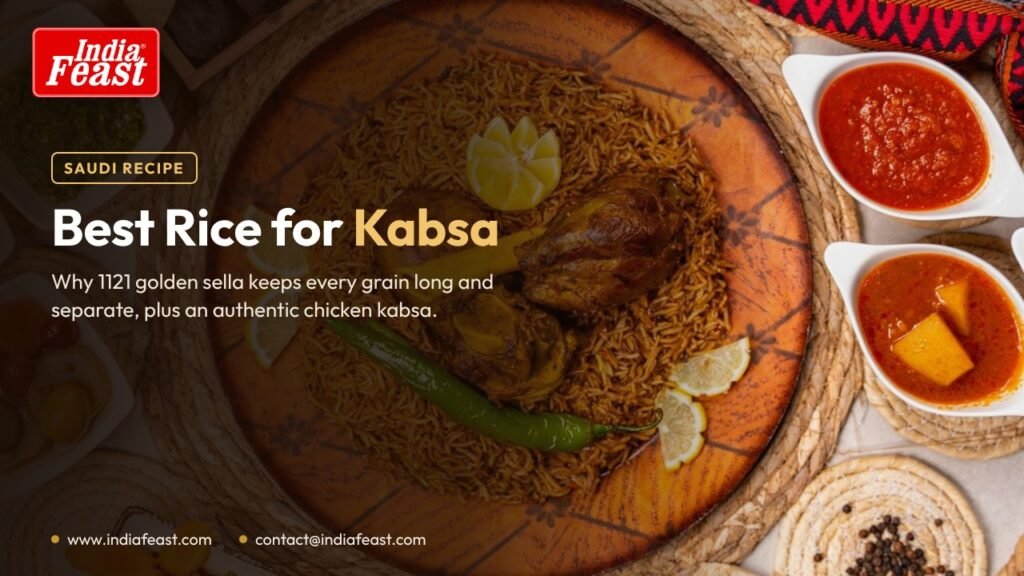
Best Rice for Kabsa: Why 1121 Golden Sella Holds Up (+ Authentic Chicken Kabsa Recipe)
By Indiafeast Team
Ask a cook in Riyadh what makes a good kabsa and the answer usually starts with the rice. The chicken can be perfect and the spice just right, yet if the grains break or turn to paste on the platter, the dish fails. So what is the best rice for kabsa? Indiafeast Millers supplies basmati to Gulf buyers every season, we have a clear view, and a family-style recipe to prove it.
This guide explains why parboiled (sella) basmati, and 1121 Golden Sella in particular, survives kabsa's long cook in spiced stock. Then we walk you through an authentic Saudi chicken kabsa, step by step.
Why sella basmati is the best rice for kabsa
Kabsa is a one-pot dish. The name comes from the Arabic word for pressing, because everything is cooked together in a single pot, as Saudipedia explains. That one-pot method is hard on rice. The grain sits in hot, fatty, tomato-rich stock, then steams on low heat until every drop is absorbed.
Ordinary raw rice softens fast under those conditions. Sella rice behaves differently. For sella rice, paddy is soaked, steamed and dried while still in the husk, before milling. That is why parboiled rice goes through about 10 processing steps against 8 for regular rice. The steaming sets the starch inside the grain, so the cooked rice stays firm, separate and long. You can read the full process in our guide to parboiled rice.
Basmati adds the length and fragrance. Its grains grow long on cooking and carry a natural aroma, as we explain in our guide to basmati rice characteristics and varieties. Put the two together and you get the look Gulf diners expect on a kabsa platter: long, golden, separate grains, each one coated in spice.
Which basmati form is the best rice for kabsa?
| Rice form | How it behaves in kabsa | Best for |
|---|---|---|
| 1121 Golden Sella | Firmest grain, golden tint, very forgiving if the pot sits a little longer | Restaurants, catering, large family platters |
| 1121 White Sella | Same firmness, whiter colour after cooking | Cooks who want a lighter look on the plate |
| 1121 Steam | Softer and quicker to cook, needs more care with water | Home cooks who like a fluffier texture |
| 1121 Raw | Most aromatic, though the easiest to overcook in stock | Experienced cooks, small pots |
All our 1121 forms share the same export specs: average grain length of 8.30 to 8.40 mm, moisture up to 12.5%, broken up to 1% and purity of at least 95%. For a side-by-side on each form, see raw, steam, white, creamy and golden sella basmati.
Ingredients for chicken kabsa
- 600 g (3 cups) 1121 Golden Sella basmati rice
- 1.5 kg chicken, bone in, cut into 8 pieces
- 3 tbsp vegetable oil or ghee
- 2 large onions (about 300 g), thinly sliced
- 5 garlic cloves, crushed
- 1 tbsp grated fresh ginger
- 2 green chillies, slit (optional)
- 3 medium tomatoes (about 350 g), grated
- 2 tbsp tomato paste
- 1 medium carrot, grated
- 2 tbsp kabsa spice mix (baharat)
- 2 loomi (dried black limes), pierced with a knife
- 1 cinnamon stick, 4 green cardamom pods, 4 cloves and 2 bay leaves
- 2.5 tsp salt, or to taste
- 1.5 litres (6 cups) water
- 40 g (1/3 cup) blanched almonds or cashews
- 50 g (1/3 cup) raisins
- 1 tbsp butter or ghee, for the garnish
- Chopped parsley or coriander, to serve
No kabsa spice at hand? Mix 2 tsp black pepper, 1 tsp each of ground cumin, coriander and cardamom, and 1/2 tsp each of cinnamon, cloves and nutmeg. Wikipedia's kabsa entry lists black pepper, cloves, cardamom, saffron, cinnamon, black lime, bay leaves and nutmeg as typical spices.
How to make chicken kabsa, step by step
- Soak the rice (45 min, alongside the chicken). Rinse the rice in cool water 3 to 4 times until it runs almost clear. Cover with fresh water and leave it to soak while the chicken cooks.
- Build the base (15 min). Heat the oil in a large heavy pot over medium heat. Fry the onions for 8 to 10 minutes until soft and golden. Add the garlic, ginger and chillies and cook for 1 minute. Stir in the grated tomatoes, tomato paste, carrot and kabsa spice and cook for 4 minutes until the oil starts to separate.
- Simmer the chicken (40 min). Add the chicken and turn it in the masala for 3 minutes. Add the loomi, whole spices, salt and 1.5 litres of water. Bring to a boil, then cover and simmer on low heat until the chicken is cooked through and tender.
- Measure the broth (5 min). Lift out the chicken and set it on a tray. Measure the broth. You need about 1.25 litres (5 1/4 cups), which is 1.75 cups of broth for each cup of dry rice. Top up with hot water or boil it down to reach that amount. Taste and adjust the salt, as the rice will absorb it.
- Cook the rice (25 min). Bring the broth back to a rolling boil. Drain the rice and add it to the pot. Boil uncovered on high heat for 5 to 7 minutes, until the liquid sinks below the surface of the rice and small holes appear. Cover tightly, turn the heat to the lowest setting and cook for 18 minutes without lifting the lid.
- Brown the chicken (10 min, while the rice steams). Brush the chicken with a little oil and a pinch of kabsa spice. Grill it under a hot grill or roast at 220°C (430°F) until the skin is golden.
- Toast the garnish (5 min). Melt the butter in a small pan. Fry the nuts until golden, add the raisins and stir for 30 seconds until they puff.
- Rest and serve (10 min). Turn off the heat and let the rice rest, covered, for 10 minutes. Fluff it gently with a fork, pile it on a large platter, place the chicken on top and scatter over the nuts, raisins and herbs.
How to serve kabsa the traditional way
Kabsa is a sharing dish. Pile the rice on one large round platter, set the chicken pieces on top and scatter the toasted nuts and raisins over everything just before it goes to the table. Serve daqqus (a simple tomato and chilli sauce), a green salad and plain yoghurt on the side. In many homes the platter sits in the middle of the floor or table and everyone eats from it together. Cooked with the best rice for kabsa, the grains stay long and separate even after the platter has been sitting for a while, which is exactly what you want at a family gathering or a big event.
Kabsa rice to water ratio and other tips
The kabsa rice to water ratio is where most cooks go wrong. Sella basmati drinks more liquid than steam basmati and needs a proper soak. We suggest these starting points, then adjust for your pot and stove:
- Golden or white sella, soaked 45 to 60 minutes: 1 cup rice to 1.75 cups broth. Older, harder rice may need up to 2 cups.
- Steam basmati, soaked 30 minutes: closer to 1 cup rice to 1.5 cups broth.
- Measure the broth itself. Tomatoes and chicken release liquid, so always measure what is in the pot after the chicken comes out.
Common mistakes
- Skipping the soak. Unsoaked sella stays chalky in the centre even when the outside is done.
- Stirring after the lid goes on. It breaks grains and releases starch. Fluff only once, at the end.
- Bitter broth. Loomi can turn bitter if crushed into the stock. Pierce it, keep it whole and remove it before serving.
- A thin pot. Kabsa needs a heavy base. A thin pot scorches the bottom before the top grains are cooked.
Got leftovers? The USDA advises putting leftovers in the fridge within 2 hours, dividing large amounts into shallow containers, and eating them within 3 to 4 days (USDA FSIS). Reheat until steaming hot.
Kabsa variations across the Gulf
Kabsa is widely seen as Saudi Arabia's national dish and is cooked across the Gulf. In other GCC countries the dish is known as makbous (also spelled machboos). Each region and each family has its own version, so treat this recipe as a base:
- Lamb kabsa: use 1.5 kg lamb shoulder on the bone and simmer for 1.5 to 2 hours before measuring the broth.
- Saffron finish: sprinkle a few threads soaked in rose water over the rice before the rest.
- Daqqus on the side: a simple tomato, garlic and chilli sauce is the classic partner.
- Restaurant batch: scale by weight. For 10 kg of rice, keep the 1.75 ratio and test a small batch first, since big pots lose less steam.
Choosing the best rice for kabsa when you buy in bulk
For a restaurant, caterer or importer, the best rice for kabsa is the one that cooks the same way every single time. A home cook can adjust a pot by eye. A kitchen that cooks 20 kg of kabsa for a wedding cannot. That is why bulk buyers in the Gulf lean so heavily on parboiled 1121 basmati: it forgives small changes in water, heat and holding time.
When you compare offers, look past the grade name and ask for these points in writing:
- Form: golden sella, white sella or steam. For kabsa, sella is the safer choice for large pots.
- Average grain length: our 1121 runs 8.30 to 8.40 mm before cooking.
- Moisture: up to 12.5% in our specs. Drier, well-aged rice absorbs broth more evenly.
- Broken grains: up to 1% in our 1121 export grade. Broken grains turn mushy first and spoil the look of the platter.
- Purity: at least 95% basmati in our contracts.
- Crop and age: ask which crop year the lot comes from, as aged rice usually cooks longer and more separate.
Then cook a sample. Free samples from Indiafeast are ready in 3 to 7 days (you cover courier and phyto), which gives you time to run a real kabsa test before the order.
Kabsa, mandi and biryani: is the best rice for kabsa different?
Kabsa, mandi and biryani all rely on long, separate grains, though each treats the rice a little differently. In kabsa the rice cooks in the meat broth, so it must absorb a lot of fat and liquid without breaking. In mandi the meat is often cooked separately and the rice takes on smoky flavour, so a slightly softer grain can work. In biryani the rice is part-boiled and layered, so cooked length and aroma matter most.
Many Gulf kitchens use one grade for all three to keep stock simple. In our experience, 1121 golden sella is the most flexible single choice because it holds its shape in broth, keeps its length under dum and still carries the basmati aroma. If your menu is mostly biryani, 1121 steam or raw can bring a softer, more fragrant result.
Storing basmati for the best kabsa results
Good rice can still disappoint if it is stored badly. Keep sacks off the floor on pallets, away from walls, sunlight and damp. Once a bag is open, move the rice into a clean, airtight container and use the oldest stock first. Rice that picks up moisture in storage cooks unevenly and can turn sticky, even if it was the best rice for kabsa on the day it arrived.
In hot, humid kitchens, buy in pack sizes you can use within a few weeks of opening. Our 10 kg and 25 kg sacks suit busy restaurant kitchens, while 1 kg and 5 kg bags work for smaller cafes and home cooks.
Buying the best rice for kabsa in bulk?
We supply 1121 Golden Sella and 1121 White Sella, processed with Sortex colour sorting and grading by length and broken percentage. Free samples are ready in 3 to 7 days (you pay courier and phyto), so you can cook-test them in your own kabsa. We pack from 1 kg retail bags to 10, 25 and 40 kg sacks and 1 MT jumbo bags, with private label artwork support, and ship FOB, CNF or CIF from Mundra, Kandla or Nhava Sheva.
Request sella basmati samplesFAQ: rice for kabsa
What is the best rice for kabsa?
The best rice for kabsa is a long-grain parboiled basmati, such as 1121 Golden Sella or 1121 White Sella. Parboiling keeps the grain firm and separate through the long cook in spiced broth, and basmati gives the length and aroma.
What is the rice to water ratio for kabsa?
For sella basmati soaked 45 to 60 minutes, use about 1 cup of rice to 1.75 cups of broth. Older, harder rice may need up to 2 cups. For steam basmati, start nearer 1 to 1.5.
Can I use normal basmati instead of sella for kabsa?
Yes. Steam or raw basmati works, though it softens faster in stock. Use less broth, a shorter soak and gentle heat, and do not stir once the lid is on.
Do I need to soak sella basmati before cooking?
Yes. Soak it for 45 to 60 minutes after rinsing. Without a soak, sella rice can stay hard in the centre while the outside turns soft.
What is loomi and can I skip it?
Loomi is dried black lime. It gives kabsa a gentle sour, smoky note. You can skip it and add a squeeze of fresh lemon at the end, though the flavour will be less traditional.
Is golden sella or white sella the best rice for kabsa?
Both work well because both are parboiled. Golden sella gives a warm golden colour and is slightly more forgiving in big pots. White sella cooks up whiter. Choose the look your customers expect.
How much rice do I need for kabsa for 10 people?
Plan about 100 g of dry rice per person, so around 1 kg of rice for 10 people, with about 1.75 cups of broth for every cup of soaked sella rice.
Can I make kabsa ahead for a party?
Yes. Cook the chicken and broth a day ahead and keep them chilled. On the day, bring the broth back to the boil and cook the soaked rice fresh, as rice tastes best when cooked close to serving.
Written by Indiafeast Team, Indiafeast Millers. Rice specs are our own export specifications. Cooking results vary with rice age, pot and heat, so treat the water ratio as a starting point and adjust to your kitchen.